
Wicked Movie Life Lessons: The Woman Who Doesn’t Need Applause
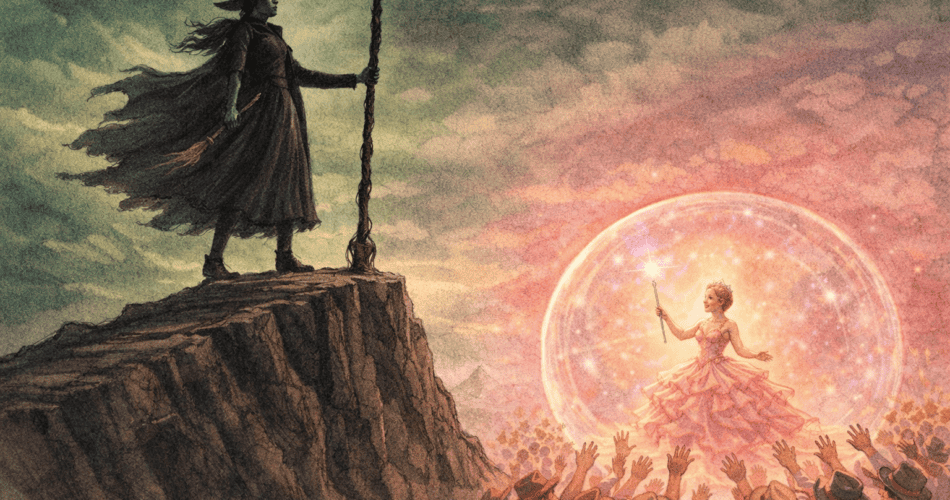
There’s a scene in Wicked that stayed with me—and it wasn’t the glitter or the costumes. It was the contrast. Not between good and wicked. But between needing to be seen… and not needing to be approved.
Because if we’re being honest, Glinda represents something very modern. She represents the world that believes looks, popularity, and visibility are everything. The curated image. The applause. The “likes.” The social smoothing. And Elphaba? She rises without asking for any of it.
The Real Divide Isn’t Good vs. Wicked
The divide is this: One woman performs to stay loved. The other stands alone and accepts being misunderstood.
We live in a time where attention is currency. Where popularity is mistaken for value. Where being visible is treated as success. Glinda understands that system. She thrives in it. She adapts to it. Elphaba never does. And that’s why she’s labeled dangerous. Not because she’s evil. But because she doesn’t need the room to clap. This is the essence of [Quiet Confidence], where we shift from seeking external validation to trusting our own internal compass.
The Woman Who Doesn’t Need Applause
Here’s the part that hit me. Elphaba doesn’t rise because she’s trying to prove something. She rises because she stops trying to fit somewhere she never belonged.
She doesn’t chase attention. She doesn’t adjust her personality. She doesn’t soften her edges for comfort. And in today’s world—that’s radical. Especially for women. We’re taught: Be agreeable. Be pretty. Be digestible. Be admired. But as I’ve explored in my [Pop Culture Therapy] pillar post, the strongest women I know? They don’t need to be admired. They need alignment.
Popularity Is Not Power
Glinda’s power is external. It’s applause-based. It’s fragile. The moment the room shifts, so does her influence.
Elphaba’s power is internal. It doesn’t depend on approval. It doesn’t depend on being understood. It doesn’t depend on social positioning. That’s why “Defying Gravity” isn’t just a performance moment. It’s detachment. It’s the realization that once you stop needing validation, the system loses leverage over you. Much like the [Bluey “Bike”] lesson on the messy middle, it’s about persistent, internal growth that doesn’t wait for a “vending machine” reward from the crowd.
The Social Media Parallel
Let’s bring this into real life. How many people are exhausting themselves trying to be Glinda online? Perfect angles. Perfect captions. Perfect optics.
But the women who are grounded—the ones building real lives—aren’t obsessed with applause. They’re building substance. And substance doesn’t trend the way performance does. But it lasts.
My Second Act Realization
I think a lot of us spend our younger years trying to be liked. Trying to smooth things over. Trying to make sure no one is uncomfortable. As a New Yorker, I know that internal pressure to “play nice” while navigating a complex world.
And then something shifts. You realize: I don’t need everyone to understand me. I don’t need to win the room. I don’t need to explain my [boundaries]. That’s when you stop performing. And ironically, that’s when you become powerful.
Wicked Movie Life Lessons
If we strip it down, here’s what Wicked really teaches:
-
Attention is not the same as influence.
-
Popularity is not the same as integrity.
-
Being misunderstood is sometimes a sign you’re no longer performing.
-
The moment you stop chasing applause, you become unmanageable.
Elphaba doesn’t rise because she’s louder. She rises because she’s detached. Detached from approval. Detached from image. Detached from needing to be seen as “good”.
And that’s a lesson I think more women need right now. You don’t have to be the most visible person in the room. You just have to be the most aligned.