


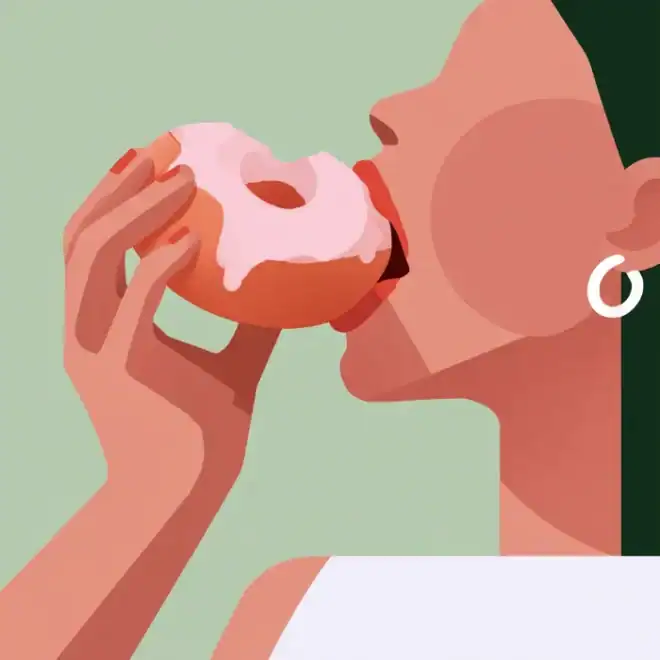
Why Ultra-Processed Food Is So Addictive — The Bliss Point Explained
The first time I heard the phrase “bliss point” was in an article I came across one night, half-paying attention.
But something about it stuck with me. I went back the next morning, read it properly, and then went down a rabbit hole researching it on my own.
What I learned changed how I thought about food — and about myself.
There’s a moment most of us recognize.
You open a bag of something small — chips, crackers, chocolate — thinking you’ll just have a little. And somehow it doesn’t stop there. One handful turns into several. One bite turns into more.
Afterward, you’re left wondering: Why is this so hard to control?
For a long time I thought it was a lack of discipline.
It turns out it’s not.
What Is the Bliss Point?
The bliss point is a term used in food science. From what I read, it refers to the precise combination of sugar, fat, and salt that makes a food feel just right — not too intense, not too bland, but exactly the level of satisfying that keeps you eating.
It was popularized by a food industry researcher named Howard Moskowitz, who spent years studying the exact formulations that make people consume more of a product without realizing they’re doing it.
Here’s the part that stopped me:
The bliss point isn’t designed to satisfy you. It’s designed to keep you eating.
That distinction matters. Food that satisfies you tells your body when to stop. Food formulated to a bliss point quietly bypasses that signal.
Why Ultra-Processed Food Feels So Hard to Stop
The more I read, the more it made sense.
Ultra-processed foods are often engineered to be highly palatable in ways that can make it easier to eat past natural fullness cues. That’s why:
- You don’t feel full in the same way you do after a real meal
- Cravings come back quickly even after you’ve eaten
- Stopping feels harder than it should
It creates a loop — eat, enjoy, want more — and because it feels subtle, it’s easy to think maybe it’s just me.
It’s not just you. It was never just you.
Even “Healthier” Versions Tap Into the Same Pattern
This is the part that caught me off guard.
I recently came across Unreal chocolate gems — a cleaner version of M&M’s. The ingredient list looked better. Simpler. Less processed.
And honestly? They taste almost identical to M&M’s, maybe even better. A little pricier, but I buy them in bulk so it balances out. So I thought okay, this is a better option.
And in many ways, it is.
But here’s what happened.
I opened the bag for the first time and had a few. Then a few more. And before I knew it, I’d eaten half the bag. Not because I was hungry. Just because it was easy to keep going.
That’s when it clicked for me again:
Even when the ingredients are cleaner, sugar is still sugar.
The combination of sweetness, texture, and convenience still taps into that same loop, regardless of how clean the label looks.
This Isn’t About Willpower
That realization changed how I thought about all of this.
For years I told myself I needed more discipline. More control. More restriction. I treated every bag of something I overate as evidence that I was failing somewhere.
But once I started understanding how some of these foods are formulated, I saw it differently:
I wasn’t failing. I was responding.
Responding to something designed — quite literally — to override the signals my body would normally send. That’s a very different problem than a willpower problem. And the solution is different too.
What Some People Notice Over Time
From what I’ve read, when ultra-processed foods make up a big part of someone’s daily eating, some patterns can show up:
- Constant hunger signals that don’t quite match what you’ve eaten
- Energy crashes that feel disproportionate
- Brain fog
- A feeling of being unsatisfied even right after eating
It doesn’t always look obvious. You can be eating what seems like a normal diet and still feel slightly off all the time.
→ What Ultra-Processed Food Is Doing to Your Body — And How It Took Over America
The Time of Day That Matters Most
The hardest moment isn’t really during the day.
It’s at night. When you’re tired, bored, or looking for comfort.
That’s when ultra-processed food pulls the strongest. Not because you’re weak — but because that’s exactly when its design is most effective. Evening hours are when most of us have the lowest decision-making energy, and convenient packaged foods are right there.
Knowing that didn’t make it disappear. But it did help me stop blaming myself for it.
What Helped Me Start Noticing the Pattern
The shift for me didn’t come from cutting everything out overnight. It came from two small changes.
01 — Reading Ingredient Labels
Not obsessively. Just enough to start understanding what I was eating. The more I read labels, the more I noticed how many “healthy-looking” products had ingredient lists that read like a chemistry experiment.
→ What Happened When I Started Reading Ingredient Labels
02 — Creating Space Between Eating
I realized I wasn’t giving my body time to reset. I was eating too often — small things throughout the day, late at night, in front of the TV without thinking.
So I started closing my kitchen earlier. Nothing extreme. Just space.
→ Intermittent Fasting for Women Over 40
That combination — awareness + space — did more than any “clean eating” plan ever did.
A More Realistic Way to Start
You don’t need to eliminate everything at once. You don’t need to be perfect.
You just need to start noticing:
- Which foods keep you reaching for more
- Which ones actually satisfy you
- How often you’re eating versus how often you’re actually hungry
Even small awareness shifts things. Not because awareness alone breaks the pattern — but because it makes the pattern visible.
You can’t change what you can’t see.
Frequently Asked Questions About the Bliss Point
What is the bliss point?
The bliss point is a term from food science describing the exact combination of sugar, fat, and salt that makes a food feel maximally satisfying — engineered to encourage continued eating rather than satisfaction. It was popularized by researcher Howard Moskowitz.
What is the bliss point when it comes to food?
In food formulation, the bliss point is the precise level of sweetness, saltiness, or fat content that triggers maximum pleasure response without overwhelming the palate. Many ultra-processed foods are specifically engineered around this point.
Why is the bliss point important?
Understanding the bliss point helps explain why some foods feel almost impossible to stop eating — even when you’re not hungry. It shifts the conversation from willpower to design, which can make patterns easier to recognize and change.
Are all ultra-processed foods designed around the bliss point?
Not all, but many highly engineered snack and convenience foods are. From what I’ve read, the formulation process specifically tests for the combination that drives repeat consumption.
Does eating “cleaner” versions of bliss point foods help?
Sometimes. Cleaner ingredients can be a real improvement nutritionally. But if the food still hits the same sugar-fat-salt combination, the eating pattern can stay the same — which surprised me when I noticed it in myself.
What’s the difference between bliss point and bliss factor?
They’re often used interchangeably. “Bliss factor” tends to be used more casually, while “bliss point” is the original technical term from food science research.
How do I stop craving ultra-processed foods?
Most of what’s helped me starts with awareness rather than restriction — reading labels, noticing which foods leave you wanting more, and giving your body space between eating windows. Restriction alone tends to backfire.
Is the bliss point real or is it a myth?
The concept is well-documented in food industry research, including work done by major food companies on optimizing product formulations. It’s a real area of study, though the way it’s discussed publicly can sometimes be more dramatic than the research itself.
Why This Matters More Than You Think
Once you understand the bliss point, something shifts.
You stop blaming yourself. You start seeing patterns. And from there, change becomes easier — not because you forced it, but because you finally understand what you’re actually working with.
For me, the biggest gift of falling down this rabbit hole wasn’t a new eating plan. It was the realization that the pattern I’d been fighting for years wasn’t a personal flaw.
It was a response. To something designed to produce exactly that response.
That alone made the whole thing feel different.
Where to Go Next
If this resonated, here’s where to read next:
- What Ultra-Processed Food Is Doing to Your Body
- What Happened When I Started Reading Ingredient Labels
- Is a 14-Hour Fast Enough for Weight Loss?
You don’t need a full reset. You don’t need extreme discipline.
You just need awareness — because once you see it, it stops feeling personal and starts feeling like something you can actually change.
This post is based on personal experience and general research I’ve done on my own. It’s not intended as medical or nutritional advice. Always consult a healthcare professional for individual concerns.