
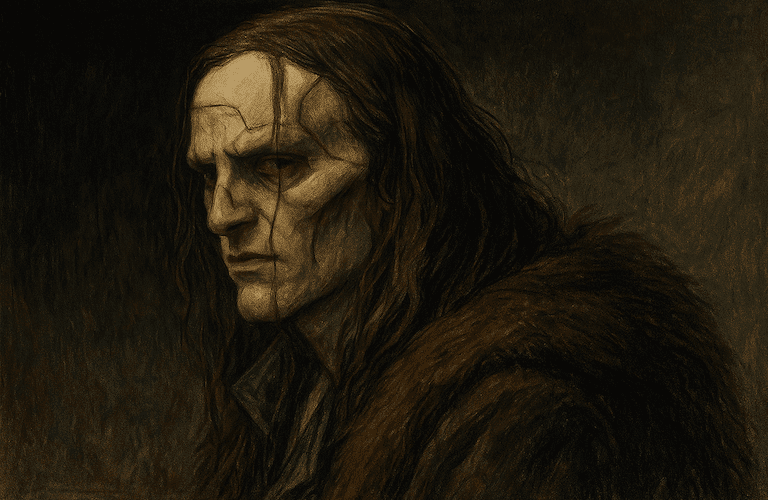
Frankenstein (2025): Guillermo Del Toro’s Beautifully Broken Monster
Last night I finally sat down to watch Guillermo Del Toro’s new Frankenstein, and wow — it was something else. I went in expecting the usual Del Toro formula: a bit of gore, some dark fantasy, that eerie gothic charm he’s famous for. But what I got instead was something much deeper.
This film isn’t just horror — it’s heartbreak disguised as horror. It’s about what happens when love, guidance, and nurturing are missing from the start. In my [Pillar Post on Pop Culture Therapy], I talked about how the stories we’re drawn to are often quiet clues pointing to what our inner child still needs. Seeing this film reminded me exactly why we look to the “outcast” or the “monster” to make sense of our own hidden pains.
Spoiler alert ahead.
The Opening: A Monster or a Mirror?
From the very beginning, the movie pulls you into that familiar story — lightning, science, the creation of life. You think, here we go, another tortured creature story. But within minutes, it starts peeling back layers, showing us that the real horror isn’t in the stitches or the screams — it’s in the loneliness.
Jacob Elordi (yes, the same guy who’s been stealing hearts lately) gives an incredible performance as the creature. He’s haunting but childlike, lost but curious. His face carries both fear and wonder — like a newborn thrown into a world already too cruel for him. You can’t help but see the boy underneath the monster.
Oscar Isaac as Victor Frankenstein is equally magnetic — brilliant, obsessed, and, at times, pitiful. The film lets us see the dynamic between creator and creation, father and son, and all the gray spaces in between.
The Real Story: Nature vs. Nurture
What I loved most is how Del Toro leans into the why. Why does someone become a monster? Is it who they are — or what was done to them?
As the story unfolds, it becomes clear that Frankenstein’s creature isn’t evil by design. He’s searching for connection, identity, and belonging — things every human being needs. But he’s met with rejection, disgust, and fear at every turn.
Del Toro takes that timeless theme — nature versus nurture — and injects it with raw psychology. You see, when a child isn’t nurtured, when they grow up neglected or unloved, something inside them fractures. And that fracture can manifest in anger, in violence, in detachment. Not because they were born that way, but because they were shaped that way.
The Psychology of Abandonment
It’s almost eerie how this movie parallels real life. The National Bureau of Economic Research found that childhood abuse nearly doubles the likelihood of future criminal behavior — even when comparing twins, one of whom was abused and the other wasn’t.
And you see that in this film. Frankenstein’s creature is the embodiment of every abandoned soul who never got the love they needed. The anger, the confusion, the need for recognition — it’s all there, pulsing through each scene like electricity through a lab wire.
Del Toro somehow makes you empathize with someone who does terrible things. That’s a rare skill — to make you understand the pain behind the violence.
When Horror Becomes Humanity
Let’s be real — Del Toro doesn’t shy away from gore. There are moments that make you wince, and yes, a few scenes that are definitely not family-friendly. But beneath the shock factor lies something tender.
It’s a reminder that we all depend on others to see ourselves clearly. As much as people say, “Don’t let anyone define your worth,” that’s easier said than done — especially when you’re young. We learn who we are through reflection, through love, through being seen. Without that, we grow distorted.
That’s the real tragedy of Frankenstein. The creature isn’t just stitched from dead bodies — he’s stitched from emotional voids.
Critics Weigh In
The film world is divided, but mostly impressed.
• The New York Times praised it as “lush, melodramatic, sweepingly romantic and achingly emotional… a tale of fathers and sons, of lovers and outcasts.” Metacritic
• On RogerEbert.com, Glenn Kenny described Frankenstein as “a breathtaking coup, an exhilarating riposte to the conventional wisdom about dream projects.” Metacritic
• And TheWrap wrote that del Toro’s Frankenstein is “a remarkable achievement… a tale of forgiveness.” Metacritic
It’s fascinating how each critic saw the same film but came away with different takeaways — some saw a masterpiece about fatherhood, others saw a warning about human ambition.
That Final Scene
Without spoiling too much, the ending left me in complete silence. There’s a scene between Victor and his creation that feels almost spiritual — like a father’s last confession to a child he failed to raise.
It made me think about how many parents, on their deathbeds, finally see what their neglect did — how their silence shaped the lives of the children they were supposed to protect.
When Victor gives the creature his final piece of advice, it’s both heartbreaking and healing. It’s the kind of closure you wish every broken soul could receive.
When the credits rolled, I didn’t move. I just sat there, letting it all sink in. I thought about how many people go through life feeling unseen — and how that pain doesn’t disappear, it mutates.
Frankenstein isn’t about monsters at all. It’s about what happens when the human need for love goes unanswered. It’s about how neglect — emotional, physical, or spiritual — can turn innocence into rage.
And that’s why I think Del Toro nailed it. He showed that the real horror isn’t in the lab — it’s in the absence of empathy.
Should You Watch It?
Absolutely — if you can handle a bit of gore and discomfort. But go in ready to feel, not just flinch. This isn’t a popcorn horror film. It’s reflective, tragic, and oddly beautiful.
I stayed up late after watching it, replaying certain moments in my mind — especially the small ones. The way the creature longed, almost ached, for a friend. Or how the simple act of placing a leaf on a stream of water became an expression of pure wonder. Those quiet details carried more weight than all the jump scares in the world.
If you’ve ever wondered how trauma shapes identity, or if monsters are born or made — this film answers that with painful honesty.
I read somewhere that this might be Del Toro’s last project — I really hope not. And I hope he gives us a sequel, because this story isn’t done yet. Not by a long shot.