
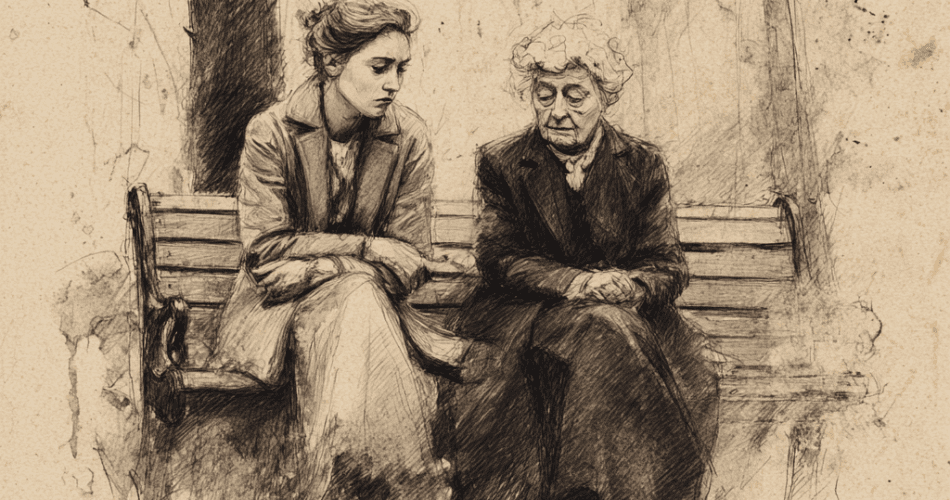
How to Forgive Your Parents and Move On
I went to see my father today.
When he answered the door, I barely recognized him.
His body looked smaller. His voice was thin. His energy—gone.
I kept it together while I was there, but as soon as I got in the car, the tears hit. I cried the whole way home.
I didn’t want my daughter to see me like that.
My husband gets it—he understands that kind of pain. But she’s still young. I want to protect her from it, even as I’m learning how to carry it.
My parents are aging, and honestly, it’s happening faster than I thought it would.
I knew one day I’d lose them—that’s life. But no one prepares you for what it’s like to watch them slowly fade. To see the people who once seemed so solid… grow fragile.
It’s like watching your foundation crumble beneath you in real time.
And in the middle of that grief, something surprising is happening.
The pain I’ve carried from my childhood? The resentment I thought I’d hold forever?
It’s softening.
Not because it didn’t matter—but because something else matters more now.
I’m learning how to forgive my parents and move on—not for their sake, but for mine
Why It’s So Hard to Forgive
When we’re young, we think our parents are supposed to have it all figured out.
We expect them to protect us, nurture us, get it right every time.
And when they don’t—when they lash out, disappear emotionally, or love us in ways that feel like conditions—we carry that pain like a scar:
See? I wasn’t enough.
But here’s the truth that most of us aren’t told growing up:
Our parents were just kids too.
Kids who had kids. Kids who were still carrying their own wounds.
They were raised on silence, not self-awareness. On duty, not joy. On fear, not emotional intelligence.
They did what they knew. Or what they could.
And often, that wasn’t enough.
I Used to Rewind the Past
I replayed so many conversations in my head—the arguments, the cold shoulders, the things I needed but didn’t get.
I wanted explanations. Apologies. A do-over.
But now, as the roles start to reverse and I see them becoming more vulnerable, something has shifted.
I don’t see perfect people who failed me.
I see flawed people who tried.
And I realize: I’m not just grieving who they are—I’m grieving who they never had the chance to be.
Learning how to forgive your parents and move on doesn’t mean pretending your pain didn’t happen.
It means choosing to release it, so it doesn’t keep defining you.
The Subtle Shift That Happens with Time
There are small moments that feel like healing:
-
The way they ask how I’m doing and really listen
-
The softness in their voice when they bring up a childhood memory
-
The absence of defensiveness when I speak my truth
They may never say “I’m sorry” outright.
But sometimes, age humbles people in ways words can’t.
You feel the shift. You just know.
You Grieve Them Before They’re Gone
Here’s what no one tells you:
You will start grieving your parents before they die.
Not just their bodies. But their limits. Their mistakes. Their blind spots.
One day, you’ll stumble on their handwriting and stop in your tracks.
You’ll go to call them, and realize you can’t.
You’ll hear your child say something—and hear your parents in their voice.
And you’ll feel it. All of it.
Not just what was. But what never will be.
That’s why learning how to forgive your parents and move on is so important—because at some point, the chance to do it while they’re still here will be gone.
Forgiveness Doesn’t Mean Forgetting
Maybe your mom gave everything and had nothing left for herself.
Maybe your dad didn’t know how to say “I’m proud of you” without a lecture attached.
Maybe they passed on fear when they meant to pass on love.
And yet—you’re still here.
You’re learning.
You’re healing.
You’re breaking cycles.
That’s the legacy.
Because the ache of what they couldn’t give you will one day be eclipsed by the ache of their absence.
As Cheryl Strayed once wrote:
“Acceptance is a small, quiet room.”
It doesn’t erase what happened.
But it lets you stop carrying it forward.
So if you’re trying to figure out how to forgive your parents and move on—start with this:
Not because they were perfect.
Not because it’s easy.
But because they were human.
And so are you.
💬 Before You Go…
If this post spoke to you, my book dives even deeper into these kinds of stories.
📚 Stronger Than You Think
A real-talk guide for women who are tired of faking fine.
Inside, you’ll find honest tools to help you rebuild confidence, set boundaries, stop people-pleasing, and show up stronger—no matter what life throws your way.
✨ Get your free ebook at FeliciaZee.com