
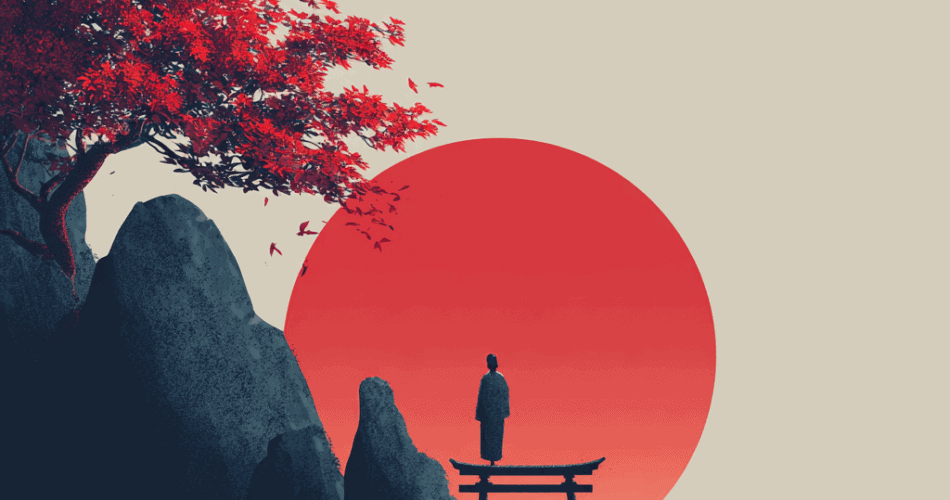
10 Quiet Japanese Principles That Can Shift Your Life
I’ve always had a deep admiration for Japanese culture—from the charm of Hello Kitty and the surreal beauty of Murakami’s writing, to the quiet magic of Studio Ghibli and the grounding discipline I found through martial arts. But more than aesthetics, what’s always drawn me in are the timeless Japanese principles—rooted in presence, simplicity, and quiet truth.
There’s a stillness beneath the surface. A calm woven through even the chaos. No overpromising, no loud striving—just a steady rhythm of acceptance, effort, and grace. It’s these Japanese principles that continue to shape how I move through the world today.
Maybe that’s why this old Zen parable has stayed with me for so long.
A university professor once visited the Zen master Nan-in to learn about enlightenment. As Nan-in poured tea into his guest’s cup, he kept pouring—until the tea spilled over and ran across the table.
Startled, the professor said, “It’s full! No more will go in!”
Nan-in replied, “Like this cup, your mind is already full. How can I show you anything unless you first empty it?”
That moment echoes more than ever today.
We fill our minds with content, opinions, plans, pressure.
We crave clarity—but we never make space for it.
Emptying your cup doesn’t mean letting go of who you are.
It means softening enough to receive what’s trying to reach you—whether it’s truth, healing, or the quiet wisdom of Japanese principles.
Below are 10 Japanese principles that gently pull you back to what matters—and remind you that growth doesn’t have to be loud to be powerful.
1. Ikigai
Your reason for being. Not your resume.
You don’t need a 10-year plan.
Just pay attention to what makes you come alive right now.
Ikigai isn’t a job title or a perfect morning routine. It’s the sweet spot where what you love, what you’re good at, what the world needs, and what can support you all quietly overlap.
For me? Writing has always been that thing. Even when it doesn’t “perform.” Even when it doesn’t pay the bills. Some days, I still wonder if I should’ve picked something safer—like accounting. Or a bakery in the south of France. But then I remember:
Ikigai isn’t about choosing the right path forever.
It’s about choosing the right thing for today.
2. Kaizen
Small steps, big changes.
We think transformation has to be massive.
But the truth is, the best changes are often boring.
Clearing your desk. Drinking your water. Taking the walk. Saying no. Logging off. Trying again. One small move at a time.
You don’t need a makeover. You need momentum.
Don’t fall into the trap of “organized procrastination”—the color-coded notebooks, the stacked self-help books, the illusion of progress.
Kaizen asks: what’s one thing—just one—you can do today?
For me, Kaizen was the only way I could start [rebuilding after my divorce]. When the big picture felt too heavy to look at, I had to focus on the ‘boring’ small steps—just making the bed, just writing one paragraph. It’s in those tiny, quiet wins that the biggest transformations actually begin.
3. Shikata Ga Nai + Ma
It is what it is. And there’s power in the pause.
Not everything gets fixed. Some people don’t change. Some moments stay unfair.
Shikata ga nai reminds you: stop resisting the reality you’re in.
And Ma reminds you to rest in the space between moments. To breathe. To feel. To be.
You are not a machine.
You are a human being in a world that won’t always make sense.
I see this play out in the most unexpected places—even in the cartoons my daughter watches. There’s a beautiful lesson in [Bluey’s ‘Bike’ episode] about the ‘messy middle.’ Sometimes things don’t work the first time, and instead of fighting the frustration, we have to learn to pause, breathe, and try a different way.
Hold space for the mess. Stop demanding closure. Make peace with the pauses.
4. Wabi-Sabi
There’s beauty in your broken places.
I used to try so hard to “fix” myself. Softer voice. Smaller laugh. Cleaner emotions. But I’ve learned the things I once tried to hide are the same things that make me real.
Wabi-sabi celebrates imperfection. The chipped mug. The undone hair. The tear-stained smile. The moment you stop pretending you’re okay just to make others comfortable.
Your cracks don’t make you weak.
They make you honest.
5. Zanshin
Stay present, even after it’s done.
You know that feeling after you finally finish something—how quick you are to move on to the next? We rush. We post. We hit publish. We cross it off and forget it happened.
But Zanshin is about lingering. Stillness after action.
The care you take after the task is done.
The reverence you keep even when no one is watching.
Let your effort have space to breathe. Let your work matter to you before you measure it by views, clicks, or comments.
6. Gaman
Endure with dignity.
This one doesn’t get shared on vision boards—but it should.
Gaman is about quiet strength. Enduring hardship without becoming bitter.
It’s not about shrinking or silencing yourself. It’s about inner fortitude.
You can be angry without being cruel.
You can be sad without being hopeless.
You can carry pain without turning it into punishment.
Grace under pressure. That’s Gaman.
7. Yūgen
Some things can’t be explained—only felt.
A scent that reminds you of home. A song that hits you in the chest. A quiet ache when your child outgrows your lap.
Yūgen lives in those spaces. It doesn’t shout. It lingers.
You don’t have to explain everything.
You don’t have to name every emotion.
You don’t have to tie your story in a bow.
Some beauty just exists. Let it.
8. Mottainai
Waste nothing—not time, not energy, not lessons.
Mottainai is a gentle reminder to honor the value of things—not just physical resources, but also opportunities, wisdom, and even your own effort.
That mistake you made? Don’t waste it.
That failed attempt? Still taught you something.
It’s not about guilt—it’s about gratitude.
Appreciate what you’ve been given, and use it with care.
9. Oubaitori
Don’t compare your journey to anyone else’s.
In Japanese, oubaitori comes from the four trees that bloom in spring—plum, apricot, peach, and cherry. Each blossoms in its own time, its own way, and is beautiful for different reasons.
You are not behind.
You are not late.
You’re just blooming on your own timeline.
We waste so much peace measuring ourselves against someone else’s highlight reel. Oubaitori invites you to grow quietly, without comparison.
10. Kintsugi
Your healing is part of your beauty.
Kintsugi is the ancient art of repairing broken pottery with gold, making the cracks part of the story—not something to hide, but something to honor.
You’re allowed to break. You’re allowed to fall apart. What matters is how you come back together.
Let your gold show.
Let your healing shine through.
One of the ‘golden repairs’ in my own life was choosing a path of [Sober Strength]. Choosing to live without alcohol wasn’t about fixing a ‘broken’ part of me; it was about honoring the cracks and deciding to fill them with something that made me stronger and clearer than I was before
💛 If this resonated…
I write for women who are navigating real life—with all its heartbreak, transitions, and quiet reinventions.
If you’re seeking more clarity, emotional strength, and perspective in the middle of it all, download my free ebook here:
👉 Get Your Copy