
Why We Sabotage Our Own Peace: 3 Reasons You’re Addicted to the Chaos
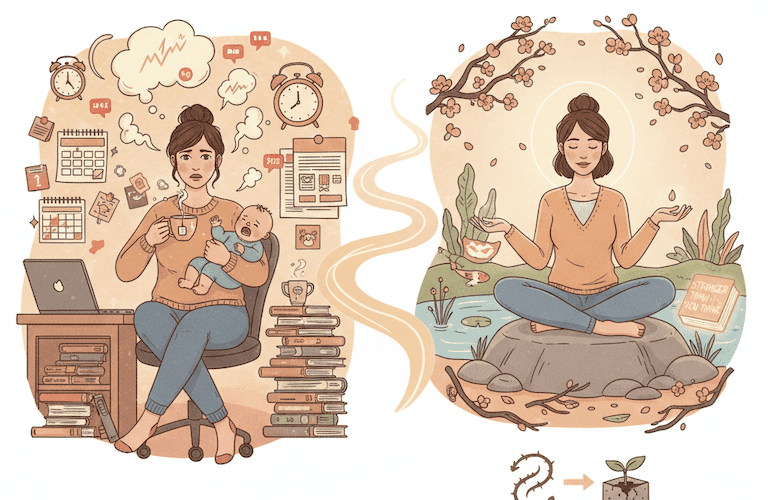
There was a time in my life when things would finally get quiet… and instead of relaxing, I’d get anxious. No drama. No emergency. No one mad at me. No fires to put out. And somehow, that felt… wrong.
If you grew up in noise—emotional noise, financial noise, relationship noise, or toxic workplace politics—peace can feel unfamiliar. And what’s unfamiliar often feels unsafe.
So what do we do? We stir something. We replay conversations. We check the phone. We anticipate betrayal. We re-open wounds that were finally closing. Not because we love suffering, but because chaos feels like home.
Here are three reasons we sabotage our own peace—and how to reclaim your mental clarity.
1. Chaos Is Familiar—and Familiar Feels Safe
If you grew up walking on eggshells, your nervous system wired itself to function in survival mode. Calm feels suspicious. Your body thinks: “Why is it so quiet? What’s about to happen?”
Instead of enjoying the stillness, you start scanning for danger. You re-read that email. You analyze her tone. You assume the worst. This is often where we fall into [the Doom Loop: when your mind goes rogue and won’t shut up], replaying scenarios that haven’t even happened.
It’s not weakness; it’s conditioning. Peace isn’t boring—it’s regulated. If you wasn’t raised in regulation, you have to teach your body what safety feels like.
2. Chaos Makes You Feel Important
This one stings. When you’re the “strong one” who handles everything, chaos gives you a sense of purpose. If everyone else is falling apart and you’re the stable one, you feel like you matter.
But who are you when things are calm?
This is especially hard for women who have carried families or workplaces on their backs. If no one “needs” you in crisis mode, you might unconsciously create a problem to solve. I had to learn this the hard way: Being needed is not the same thing as being valued. You are allowed to exist without earning your worth through exhaustion.
3. You Don’t Trust That Peace Will Last
When you’ve experienced sudden betrayal or emotional abandonment, you start believing that good moments are temporary. So, you brace for impact. You think, “Something always happens,” or “This won’t last.”
Sometimes, you’ll even push people away first because if you end it, at least you’re in control. That’s not strength—that’s [teenage survival tactics] overstaying their welcome in your adult life. Real strength is letting go of the need to control the outcome.
How to Stop the Cycle of Self-Sabotage
You don’t flip a switch and become serene overnight. You start with small, [daily habits for mental clarity] that anchor you when the urge to “stir the pot” arises.
-
Let a quiet moment be quiet: Don’t reach for your phone the second there is a lull.
-
Don’t chase every shift in mood: You aren’t responsible for “fixing” everyone’s energy.
-
Don’t insert yourself into every storm: Observe it, and let it pass.
The strongest woman in the room is usually the calmest. Not because she doesn’t see the chaos, but because she no longer feeds it. Now that I’m 50, I’m learning that this is the “Second Act”—a time for pruning the noise so we can grow in peace.
Your Turn: Where are you creating noise because silence feels uncomfortable? You don’t have to fix it all tonight. Just notice it. That’s how we start coming home to ourselves.