
How to Build Emotional Strength as a Woman (When Life Is Real, Not Ideal)
A practical guide to resilience, boundaries, and emotional steadiness
There comes a point in life when the motivational slogans stop working. When the affirmations feel like a costume that doesn’t quite fit, and the “good vibes only” mantra starts to feel like a form of gaslighting. We’ve all been told to “rise and grind,” to “manifest our best lives,” or to “reinvent ourselves” after a breakup or a career setback.
But what if you don’t need a total overhaul? What if you don’t need to become a different person, but rather a steadier version of the one you already are?
Real emotional strength isn’t found in the highlight reels of social media. It is found in the quiet, unglamorous moments: the Tuesday afternoon when work feels draining, the Sunday evening when a wave of unexplained heaviness hits, or the moment you decide not to engage in an argument that would cost you your peace.
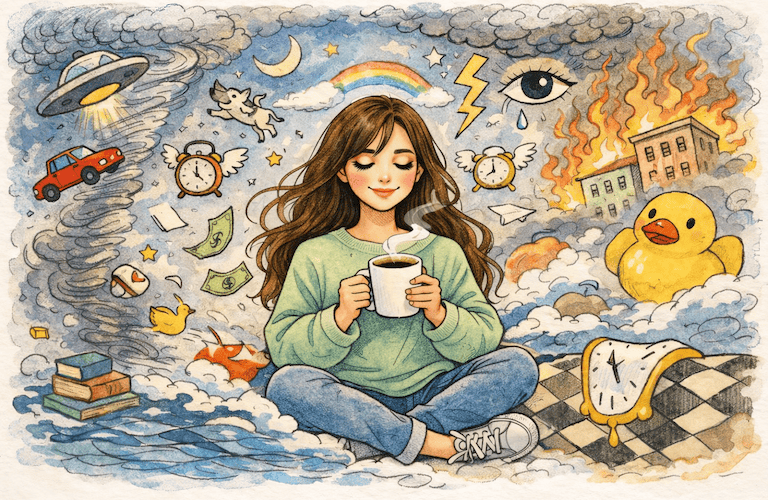
Emotional strength isn’t about becoming harder. It’s about becoming steadier. It’s about navigating life when it’s messy, imperfect, and stubbornly un-ideal. This is a guide for the woman who is tired of the surface-level advice and is ready to do the deeper work of building a life that feels as good on the inside as it looks (or doesn’t look) on the outside.
1. Emotional Strength Starts With Regulation, Not Control
For generations, women have been taught that being “strong” means having it all together. We equate strength with control—controlling our weight, our schedules, our children, and most of all, our emotions. We’ve been conditioned to believe that showing emotion is a sign of instability, so we either suppress our feelings until we explode, or we justify them with a laundry list of reasons to prove we aren’t “crazy.”
Emotional strength, however, is not about control. It is about regulation.
Control is a rigid grip that eventually breaks; regulation is the ability to flow with the tide without drowning. It means recognizing the signs of overwhelm before your nervous system hijacks the day. It means knowing that when your chest feels tight or your thoughts start racing, you have the tools to ground yourself.
One of the most effective ways to build this regulation is through the “boring” stuff: habits. 10 Daily Habits for Mental Clarity aren’t just productivity hacks; they are safety nets for your mind. When your external world is chaotic, having a predictable internal rhythm—like a morning routine or a consistent way of processing stress—tells your brain that you are safe.
When you lose that rhythm, you often fall into The Doom Loop: When Your Mind Goes Rogue and Won’t Shut Up. This is that familiar cycle of overthinking where one negative thought feeds the next until you’re convinced your entire life is a catastrophe. Breaking this loop isn’t about “thinking positive”; it’s about learning How to Stay Calm When Everything Feels Overwhelming by returning to the present moment. Regulation is the art of responding to your mind with steadiness instead of panic.
2. Resilience Is Built in the Middle, Not the Outcome
We often talk about resilience as a trophy we win after the battle is over. We look at a woman who survived a difficult divorce or a job loss and say, “She’s so resilient.” But resilience isn’t the finish line; it’s the way you walk the track.
Resilience is built in the “middle”—that uncomfortable, gray space where the problem hasn’t been solved yet and the future is still blurry. It’s the season where progress feels invisible. In our culture of instant gratification, we feel like if we aren’t seeing immediate results, we must be failing. But When the Results Don’t Show Up, it doesn’t mean you’re broken—it means you’re human. Growth, like the roots of a tree in winter, often happens underground where no one can see it.
Building emotional strength requires a shift in how we view challenges. Instead of seeing a detour as a dead end, we can practice Turning Setbacks into Strength. A Setback Season is often where the most vital rebuilding happens. It forces you to ask: What is actually essential? What habits was I leaning on that no longer serve me?
Learning How to Stay Motivated When Life Gets Hard isn’t about finding a “spark” of inspiration; it’s about staying present long enough for meaning to take shape. Resilience is the quiet commitment to keep showing up for yourself, even when you’re not sure where the path is leading.
3. Rewriting the Inner Narrative
The greatest enemy of emotional strength isn’t external circumstances; it’s the voice inside your head. For many women, that voice is a relentless critic. It tells you that you’re “behind,” that you should have known better, or that you’re being “too much” (or not enough).
This negative self-talk often masks itself as “ambition” or “self-improvement,” but in reality, it is a form of emotional erosion. It wears down your confidence and keeps you in a state of hyper-vigilance. Learning How to Stop Negative Self-Talk starts with the realization that the voice isn’t you—it’s conditioning. It’s the echo of every societal expectation and “should” you’ve ever absorbed.
Interrupting this narrative requires a change in Perspective: The Quiet Power That Changes Everything. Instead of asking “Why is this happening to me?”, an emotionally strong woman asks, “What is this teaching me?” or even better, “How can I be kind to myself while I navigate this?”
When you change how you speak to yourself, you change what you’re willing to try. You stop punishing yourself for being “just human” and start allowing yourself the grace to be a work in progress.
4. Boundaries Are Emotional Strength in Action
You cannot be emotionally strong if you are constantly being drained by the needs, moods, and demands of others. For many women, the word “boundary” feels aggressive or selfish. We’ve been socialized to be the nurturers, the peacekeepers, and the “easy-going” ones. We confuse being strong with being endlessly understanding.
But there is a point where being “understanding” becomes self-betrayal.
Know Your Worth: Set Boundaries, Build Self-Respect, and Stop Settling. Boundaries are not walls meant to keep people out; they are the gates that protect your energy. Setting them doesn’t make you difficult; it makes you honest. It is an act of high-level emotional strength to say, “I can no longer carry this for you,” or “This behavior is not acceptable to me.”
This is especially true in the professional world. We often face subtle (or overt) challenges to our peace in the office. Understanding The Power of Silence: Emotional Strength in Office Politics and knowing How to Respond When They Undermine You at Work without losing your cool are essential skills. It’s about maintaining your internal equilibrium even when people are trying to tilt the floor beneath you.
When you learn How to Set Boundaries Without Feeling Guilty, you realize that your primary responsibility is to your own well-being. You cannot pour from an empty cup, and boundaries are the only way to ensure that cup stays full.
5. The Power of Ordinary Habits
We often look for “breakthrough” moments—the retreat, the epiphany, the big life change—to find strength. In reality, emotional strength is built in the mundane. It is built in the way you start your morning and the way you close your eyes at night.
Routines are not about being a “tradwife” or a “girlboss.” They are about predictability. Your nervous system thrives on knowing what comes next. If your life is a constant series of reactive decisions, your brain stays in a state of high alert.
A solid Morning Routine provides the productivity tips you need, but more importantly, it provides a sense of agency. It says, I am the captain of this day. Similarly, Evening Habits for a Productive Morning allow your brain to decompress and process the day’s stress so you don’t carry it into your dreams.
If you find yourself constantly exhausted, it’s worth asking: Is It Burnout — Or Just a Funk? Emotional strength grows when your life has enough structure to support recovery. You cannot be strong if you are perpetually depleted. Maintenance is not a luxury; it is a prerequisite for resilience.
6. Healing Isn’t Linear—And That’s Okay
One of the heaviest burdens women carry is the expectation that we should be “over it” by now. Whether “it” is a childhood trauma, a past relationship, or a version of ourselves we’ve outgrown, we expect healing to move in a straight, upward line.
But healing is more like a spiral. You will revisit old wounds, but you will do so with new tools and a stronger foundation. From Teenage Survival Tactics to Adult Healing, we often have to unlearn the very behaviors that once kept us safe. The “toughness” you developed as a girl might be the very thing preventing you from being a strong, vulnerable woman today.
This often involves the complex work of family dynamics. Learning How to Forgive Your Parents and Move On is not about excusing their behavior; it’s about releasing the weight of their mistakes so you can walk freely. When Family Hurts, emotional strength looks like finding hope in unexpected places and creating a “chosen family” of people who reflect your true value back to you.
7. Strength Is the Permission to Feel
There is a pervasive myth that emotional strength means being “unfazed.” We picture the strong woman as a stoic figure who never cries and never lets anyone see her sweat.
That isn’t strength. That’s armor. And armor is heavy.
True emotional strength is the ability to sit with sadness without panicking. It is the realization that It’s Okay to Cry—that crying isn’t a sign of collapse, but a sign of movement. It means something is shifting within you.
Sometimes, the strongest thing you can do is acknowledge the weight of your feelings. Other times, strength means knowing when to Distract Yourself When You’re Feeling Sad so you don’t spiral into the “doom loop.” It’s about having a toolkit. For example, understanding Why Sundays Feel So Heavy can take the sting out of the “Sunday Scaries.” When you understand the “why” behind your emotions, they lose their power to frighten you.
Strength isn’t numbness. It is the capacity to feel the full spectrum of human emotion—sadness, joy, anger, and peace—without letting any of them define your permanent reality.
8. Finding Meaning in the “Unserious”
Finally, building emotional strength requires a sense of play and a willingness to find wisdom in unexpected places. We often think “self-help” has to be found in thick textbooks or intense therapy sessions. But sometimes, the most profound insights come from the stories we consume.
Pop Culture Therapy is a real tool. Movies and shows can serve as mirrors, helping us see our own patterns through the safety of a fictional character. Even children’s media can be a profound source of strength. Take the show Bluey, for example. The episode “Bike” is a masterclass in why persistence is built in the messy middle, and “Sleepytime” offers a perspective on adult life and letting go that many “adult” dramas fail to capture.
These aren’t just distractions. They are invitations to see yourself with more compassion. They remind us that the human experience is universal, and that we are all just trying to figure it out as we go.
What Emotional Strength Looks Like Over Time
As you continue on this journey, you will notice that “strength” starts to look different. It’s no longer about how much you can endure, but how well you can thrive.
Emotional strength looks like:
-
Responding instead of reacting: Taking that one-second pause before you speak in anger.
-
Resting without justification: Believing that your worth isn’t tied to your productivity.
-
Trying again without self-punishment: Seeing a mistake as data, not a character flaw.
-
Choosing silence when engagement would cost you peace: Knowing that you don’t have to attend every argument you’re invited to.
-
Trusting yourself even when outcomes are uncertain: Building an internal compass that doesn’t rely on external validation.
You don’t need to become a “new you.” You just need to come back to yourself—consistently, gently, and honestly.
Where to Go Next
If you’re ready to start building this steadiness, I invite you to explore the deeper pieces linked throughout this post. Start with 11 Ways To Stay Emotionally Strong as a Woman or dive into the practicalities of Setting Boundaries.
Emotional strength isn’t built by force; it’s built by attention. Thank you for being here, and for doing the work of becoming the steadiest version of yourself. If you’re looking for a roadmap to support this journey, my guide [ Stronger Than you Think] offers daily practices to help you stay anchored.